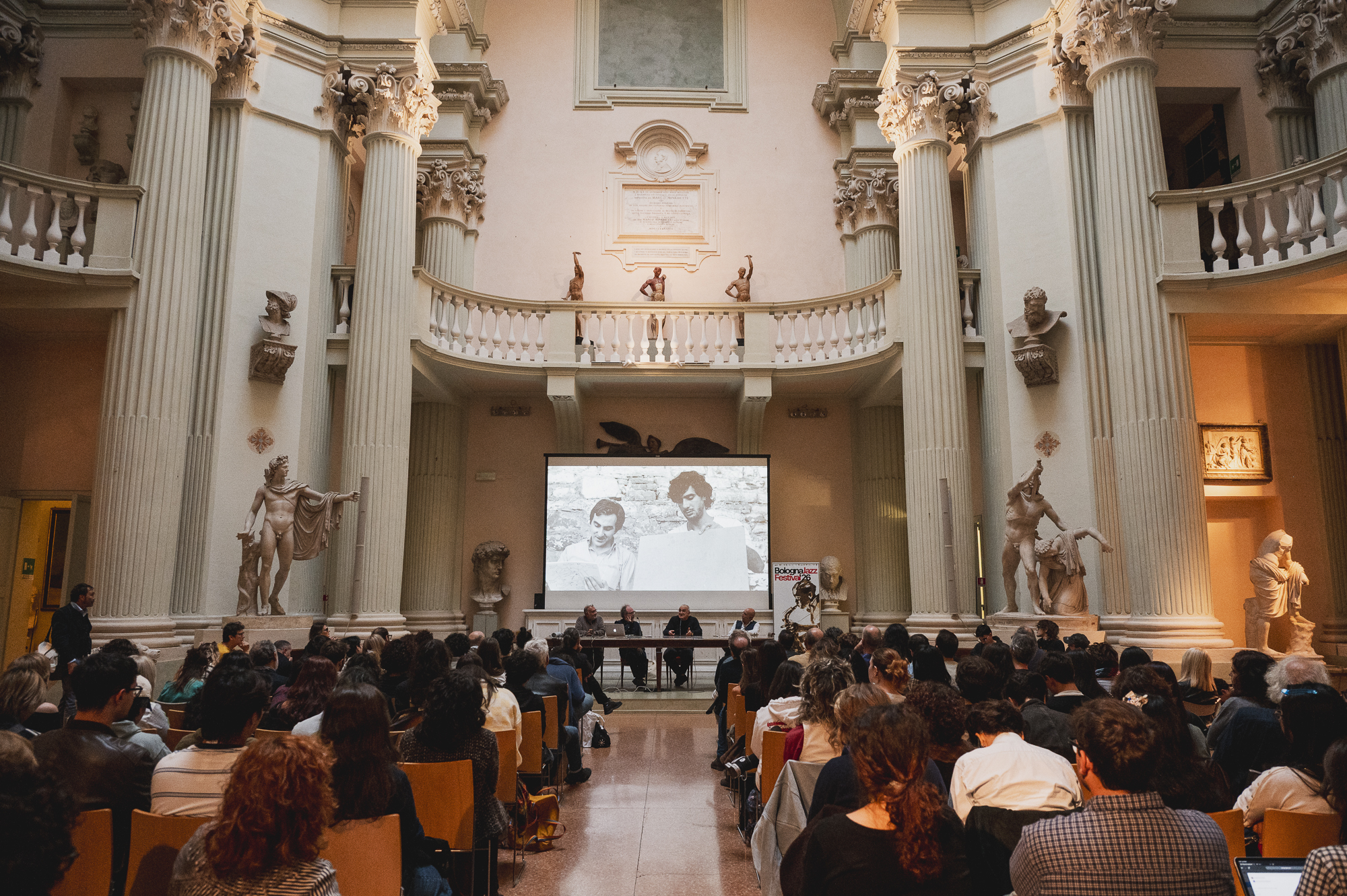
During an event organized by Arci Nazionale to discuss the situation in Cuba, a portrait of John Lennon by Gianluca Costantini was presented to Abel Prieto, the Cuban writer, former Minister of Culture, and president of Casa de las Américas. The gesture offers an opportunity to explore Prieto’s life, the history of one of Latin America’s most influential cultural institutions, and the relationship between art, politics, and international solidarity.
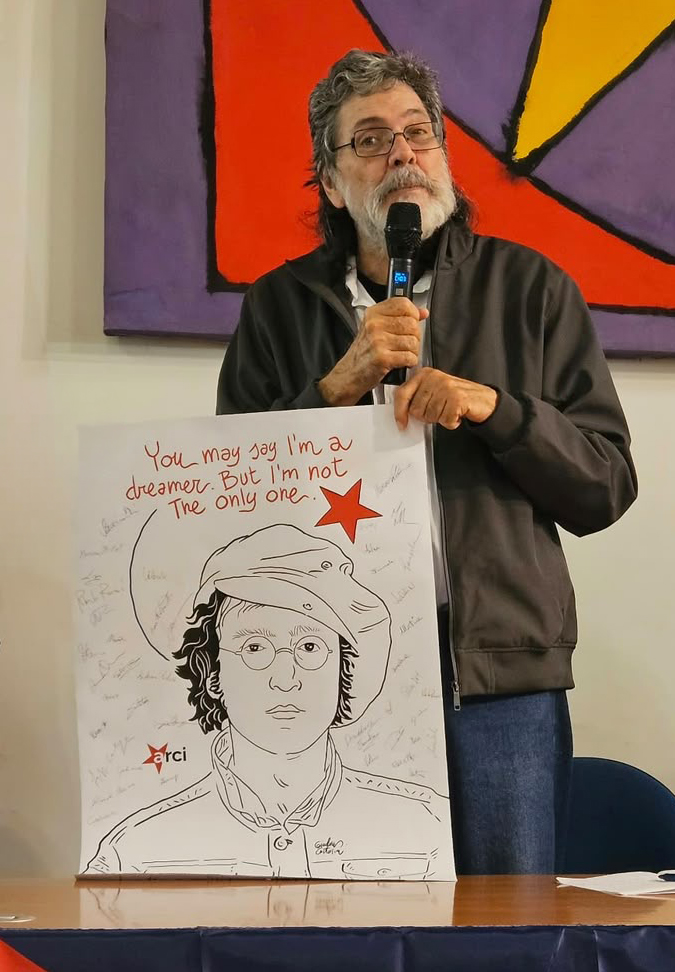
A portrait of John Lennon, accompanied by a line from his song Imagine, became a symbolic gesture of cultural dialogue during a recent meeting organized by Arci Nazionale and dedicated to the situation in Cuba. The drawing, created by Italian artist Gianluca Costantini, was presented to Abel Prieto, a writer and one of the most prominent figures in Cuban cultural life.
The event brought together representatives of civil society to discuss the living conditions of the Cuban population, the consequences of United States economic sanctions and the longstanding embargo, and the experience of Rotta su Cuba, an institutional solidarity initiative.
Before the public discussion, Prieto also met with Elly Schlein, secretary of Italy’s Democratic Party, Laura Boldrini, a member of the Italian Parliament, and Walter Massa, national president of Arci.
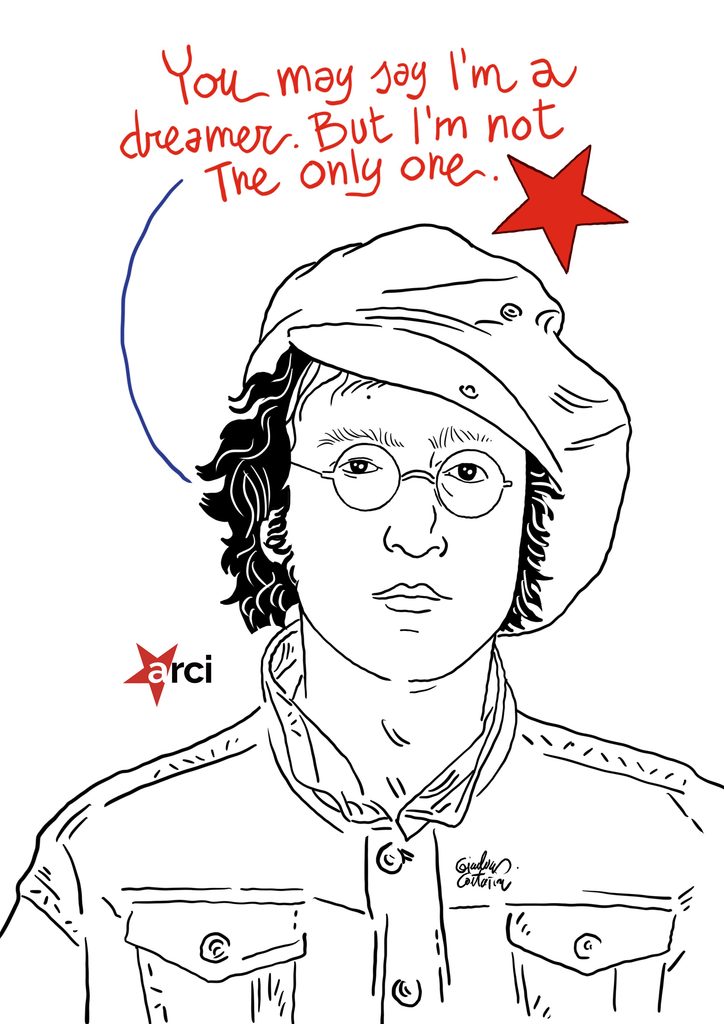
The portrait depicts John Lennon, whose music and public advocacy for peace have made him an enduring symbol of cultural freedom and the possibility of imagining a different world. Its presentation to Prieto connects the history of popular music with a much broader conversation about the role of artists and intellectuals in times of political tension.
For Costantini, whose work frequently explores the relationship between drawing, human rights, and public memory, the gesture reflects a conviction that images can travel across borders and create encounters between people with different experiences and histories.
Abel Prieto Jiménez was born on November 11, 1950, in Pinar del Río, western Cuba. He studied Hispanic literature at the University of Havana and subsequently taught literature, beginning an intellectual career that would move between fiction, literary criticism, publishing, and cultural administration. Before entering the highest levels of Cuban cultural policy, he directed Editorial Letras Cubanas and served as president of the Unión de Escritores y Artistas de Cuba (UNEAC), the country’s principal official association of writers and artists.
His literary work includes the short-story collections Los bitongos y los guapos (1980) and Noche de sábado (1989), as well as the novels El vuelo del gato (1999) and Viajes de Miguel Luna (2012). His writing frequently explores Cuban society, cultural identity, intellectual life, and the tensions between individual experience and collective history. He has also written literary criticism, including studies of the influential Cuban poet and novelist José Lezama Lima.
Prieto’s political career developed alongside his literary work. He served as Cuba’s Minister of Culture from 1997 to 2012 and again from 2016 to 2018, holding responsibility for cultural policy during periods of significant economic and political change. His longstanding association with the Cuban revolutionary leadership made him an influential advocate of its cultural institutions and of a vision of culture closely connected to national identity, public education, and Latin American sovereignty. Since 2019, he has served as president of Casa de las Américas.


CHANNELDRAW STUDIO · INDEPENDENT PUBLISHING
Active Art Yearbook
A year of drawings, stories and civic engagement. Discover the Channeldraw annual volumes.
Explore the yearbooks →To understand the importance of Prieto’s present role, it is necessary to return to April 28, 1959, when Casa de las Américas was founded in Havana, only months after the Cuban Revolution. Its founder, Haydée Santamaría, had participated in the revolutionary struggle against Fulgencio Batista and became one of the central figures in Cuba’s post-revolutionary cultural development. She envisioned an institution capable of connecting Cuban artists and intellectuals with their counterparts throughout Latin America and the Caribbean, particularly at a time when Cuba faced growing diplomatic isolation.
Casa de las Américas was never conceived simply as a cultural venue. Its purpose was to build a continental network of writers, artists, musicians, researchers, and thinkers, encouraging exchanges across national boundaries and creating opportunities for voices that had often been marginalized by established cultural institutions. Through publishing, exhibitions, conferences, and artistic exchanges, it became a major meeting place for Latin American intellectual life.
One of its most important initiatives is the Premio Literario Casa de las Américas, established in 1960. Over the decades, the prize has recognized literature across genres including fiction, poetry, theater, and essays, helping introduce writers from different parts of the continent to wider audiences. The institution has also developed significant collections of visual art, popular art, and cultural documentation, preserving a history that extends beyond conventional national narratives.
The intellectual legacy of Casa de las Américas is closely associated with figures such as Roberto Fernández Retamar, the Cuban poet and essayist who later led the institution, and with the wider debates about colonialism, cultural independence, and Latin American identity that shaped the second half of the twentieth century. Its history also reflects the complex relationship between artistic creation and political institutions in revolutionary Cuba: a relationship marked by significant achievements in cultural exchange, but also by persistent debates about ideological boundaries and artistic autonomy.
In an interview about the history and mission of Casa de las Américas, Prieto described the institution as part of a tradition inspired by Simón Bolívar and José Martí, emphasizing cultural cooperation, regional solidarity, and the idea that access to culture should be understood as a fundamental right rather than merely a commercial activity. He also highlighted the importance of popular artistic traditions and the institution’s collections of works donated by artists from across the continent.
This historical mission gives Casa de las Américas particular significance today, as Cuba confronts a prolonged economic crisis and renewed international tensions. The difficulties experienced by the population include shortages of food and medicine, unreliable electricity supplies, and serious limitations on transportation and public services. The United States embargo contributes to the country’s economic isolation, while domestic economic decisions and structural problems also shape everyday conditions. At the same time, international human rights organizations continue to document restrictions on freedom of expression, arbitrary detention, and the imprisonment of artists and government critics. These realities are essential to any comprehensive discussion of contemporary Cuba.
The Italian initiative Rotta su Cuba emerged within this broader humanitarian context. Supported by organizations including Arci, ANPI, CGIL, Nexus, and the Associazione Nazionale di Amicizia Italia-Cuba, the mission sought to draw attention to the island’s humanitarian needs and provide practical assistance. According to Laura Boldrini’s account of the initiative, the related Energia per la vita campaign raised €380,000 and delivered solar panels, medicines, and school supplies.
The encounter with Abel Prieto organized by Arci Nazionale therefore brought together several interconnected questions: the material consequences of economic isolation, the responsibility of international civil society, and the importance of maintaining cultural relationships even when political disagreements remain unresolved.
Within this setting, the portrait of John Lennon carried a particular resonance. Lennon represents a tradition in which music became a means of questioning violence, war, and established political assumptions. His work has crossed ideological and geographical borders, reaching audiences who may disagree on politics but recognize the emotional and imaginative power of a song.
ChannelDraw × Arci / From the archive
Art, memory and solidarity
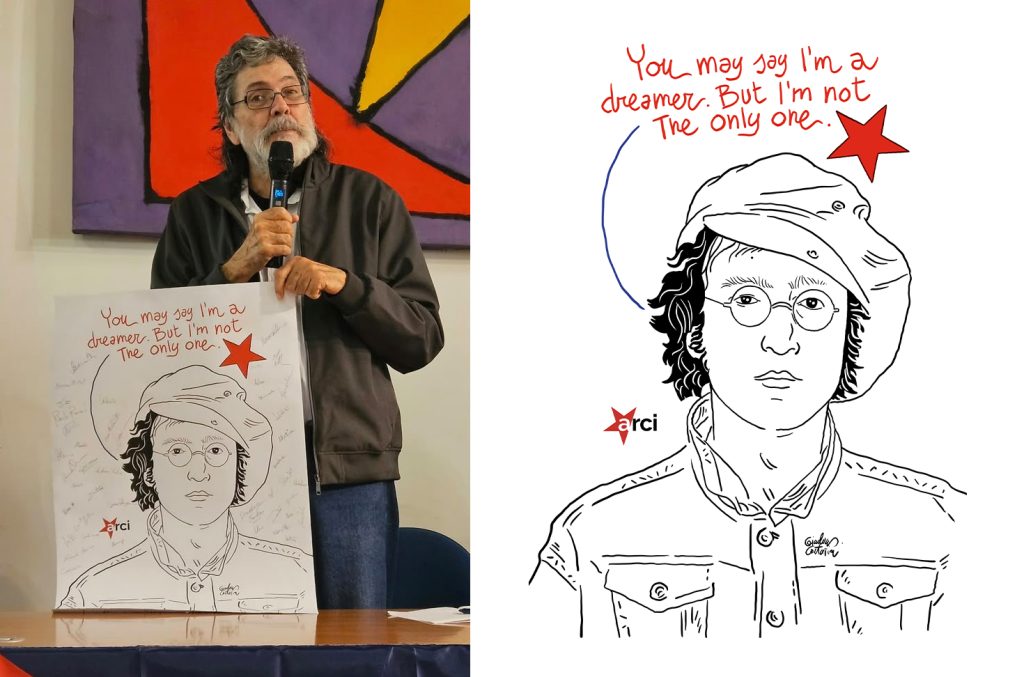



The drawing by Gianluca Costantini depicts Lennon wearing his familiar round glasses, accompanied by the red star and the Arci symbol. It includes a handwritten reference to Imagine, connecting the portrait to Lennon’s vision of peace and human solidarity.
For Costantini, portraiture has long been a way to bring political and human stories into public view. Through ChannelDraw, his independent project dedicated to visual journalism, human rights, and freedom of expression, he has documented the lives of journalists, political prisoners, activists, and individuals affected by repression and conflict.
That commitment was also explored in the exhibition Ceasefire 2005–2025: Twenty Years of Battles for Human Rights, which traced two decades of drawing as a form of testimony, memory, and public engagement.
The presentation of Lennon’s portrait to Prieto belongs to this same understanding of art as a means of communication. It is not simply an exchange of an artwork between individuals, but a gesture situated within a longer history of artists, writers, and cultural institutions attempting to create dialogue across borders.
For Casa de las Américas, whose history has been shaped by the circulation of literature, images, and ideas throughout Latin America and beyond, such exchanges are part of a tradition that began in 1959. For ChannelDraw, they reflect the belief that a drawing can have a public life beyond the studio, becoming part of encounters, conversations, and collective memory.
The image of John Lennon arriving in the hands of Abel Prieto brings these histories together: the cultural legacy of the 1960s, the political and artistic history of Cuba, the work of international solidarity organizations, and the enduring capacity of a portrait to carry a message from one person to another.
It is a small gesture, but one that recalls a fundamental possibility of art: to open a conversation where geography, history, and politics might otherwise create distance.
ChannelDraw is independent and reader-supported. Your support helps us continue documenting artists, journalists and activists whose voices are threatened or censored.
Other ways to support ChannelDraw
You can also support our independent work by joining us on Patreon or Substack, or by purchasing a ChannelDraw Yearbook. Every contribution helps us keep ChannelDraw independent and continue documenting stories that need to be seen.